Guides
Fermentation
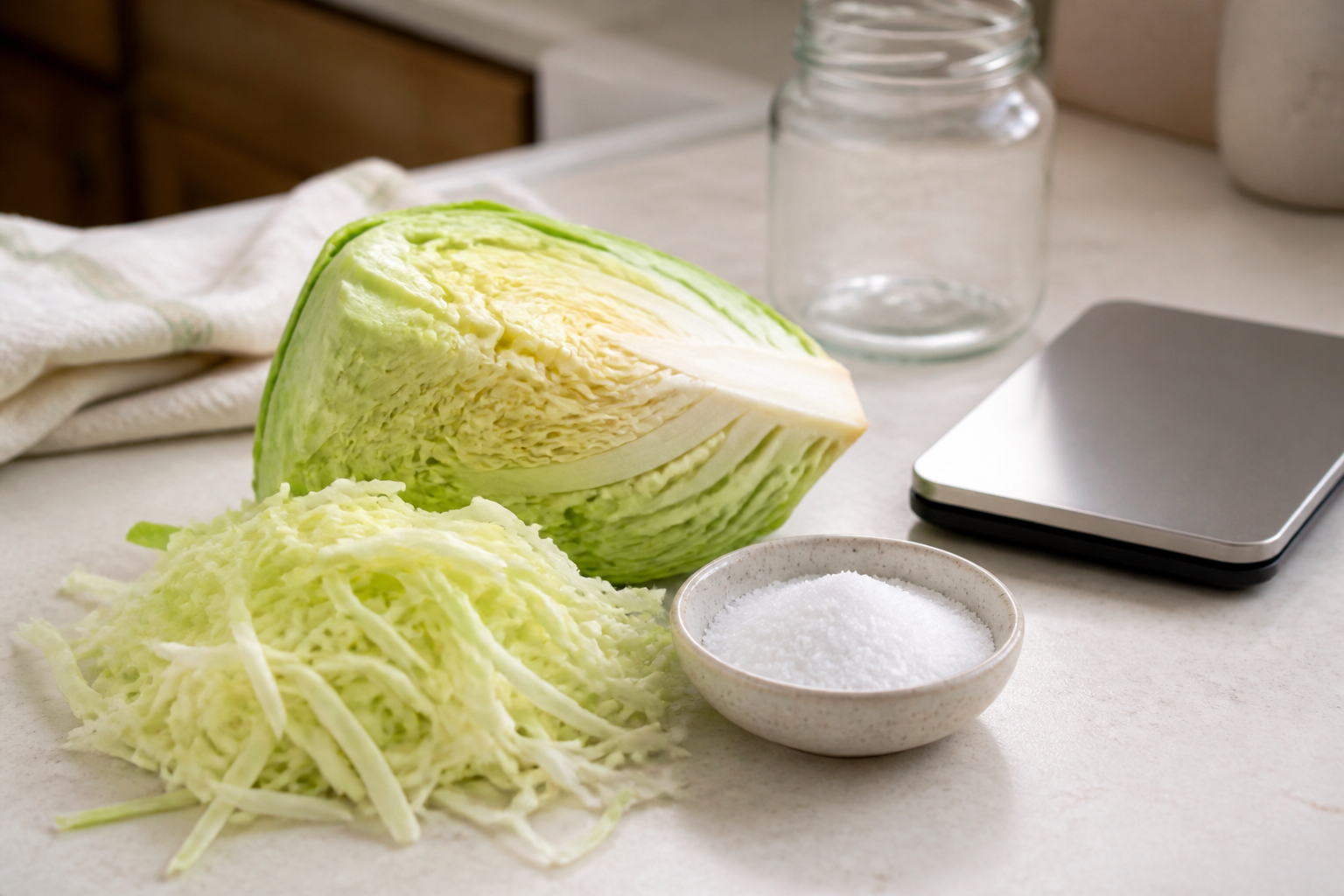
How Much Salt Do You Need for Sauerkraut?
We use 2.25% salt by cabbage weight for sauerkraut. Here is how to calculate it, why weight beats teaspoons, and what salt does in the jar.
Fermentation
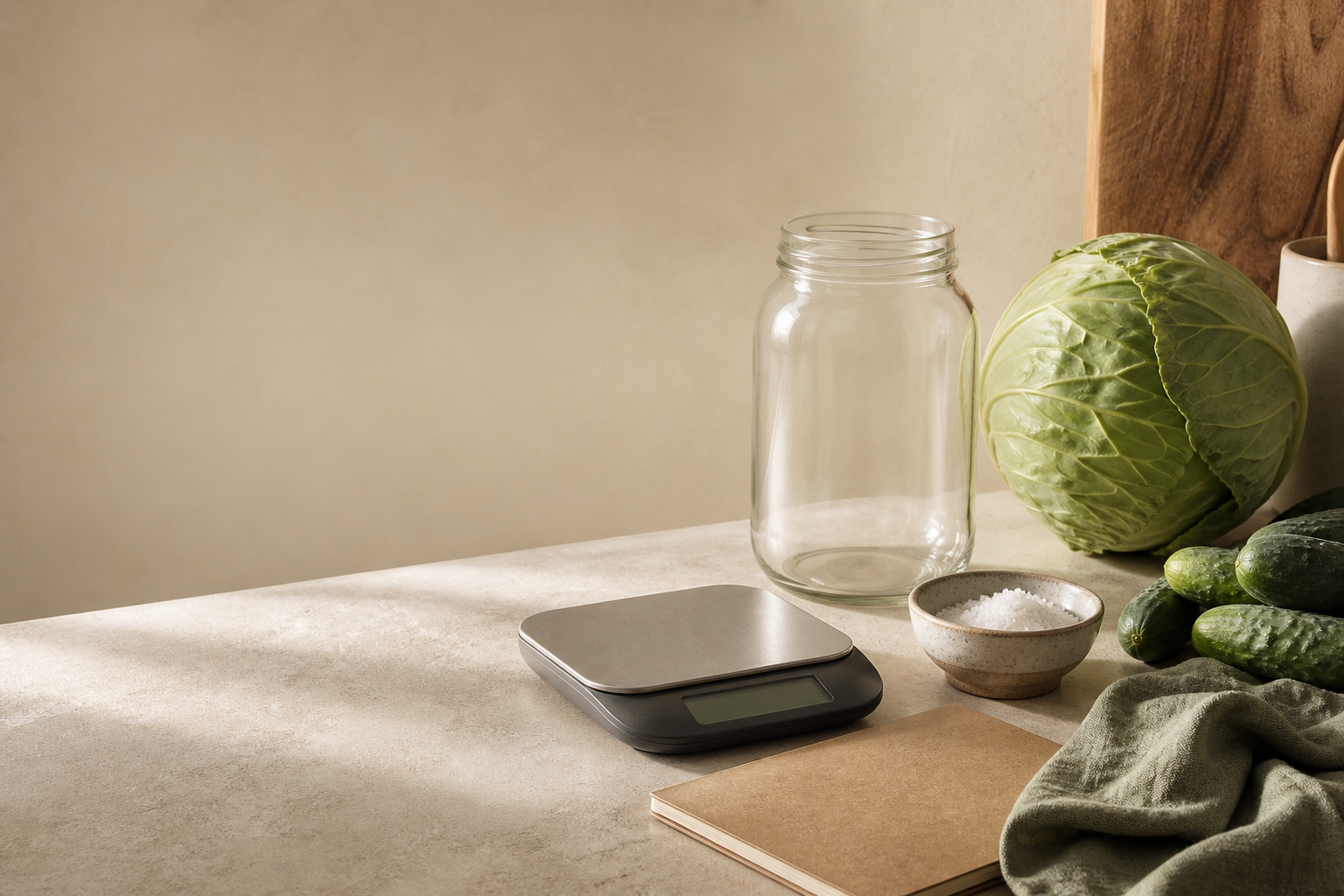
What Equipment Do You Actually Need to Ferment?
See what you need for a first jar, what you can improvise safely, and when a scale, weight, tamper, or airlock helps.
Fermentation
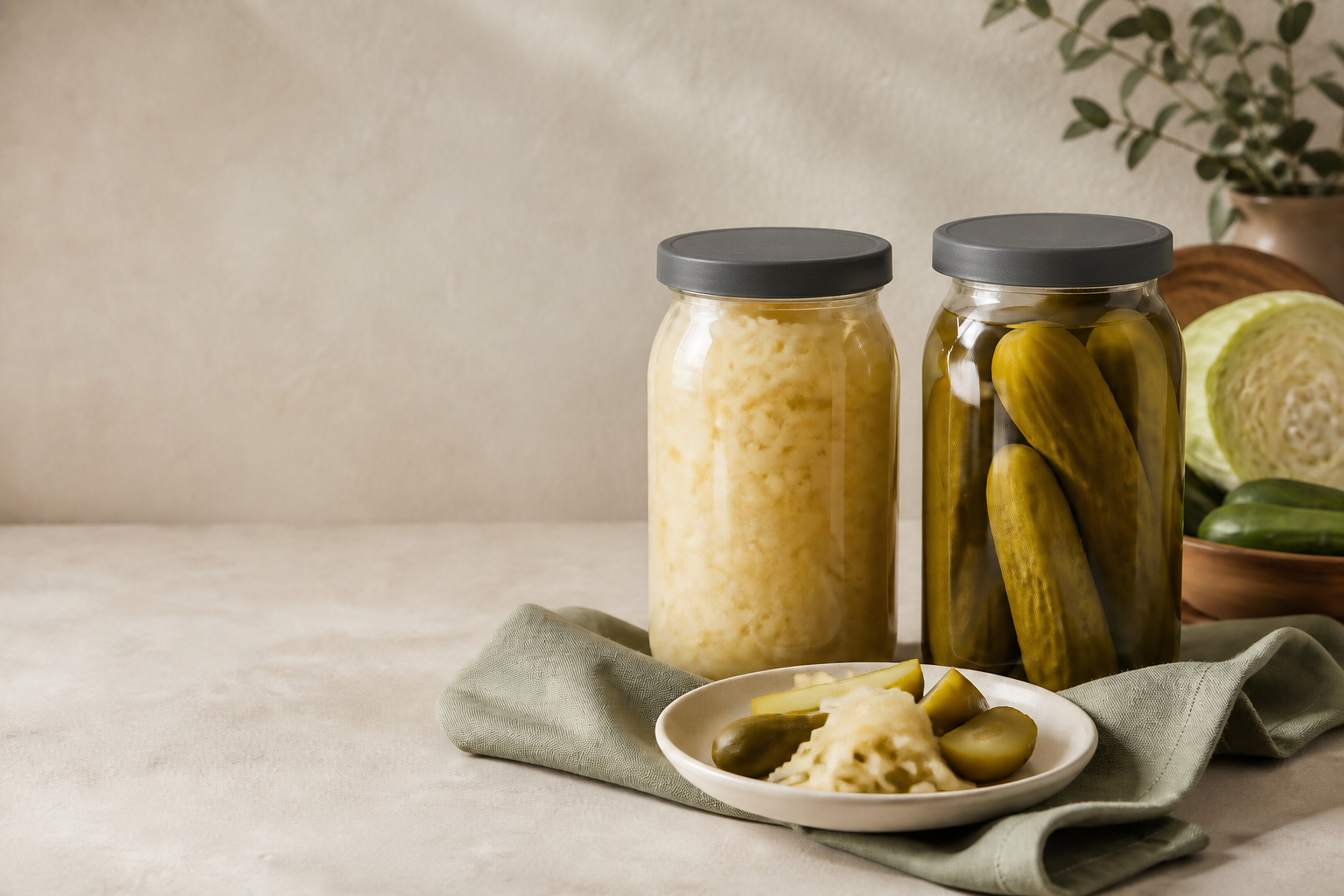
What Does a Normal Ferment Look Like?
Learn which bubbles, cloudy brine, sediment, aromas, and texture changes are common, plus when to throw a batch away.
Fermentation
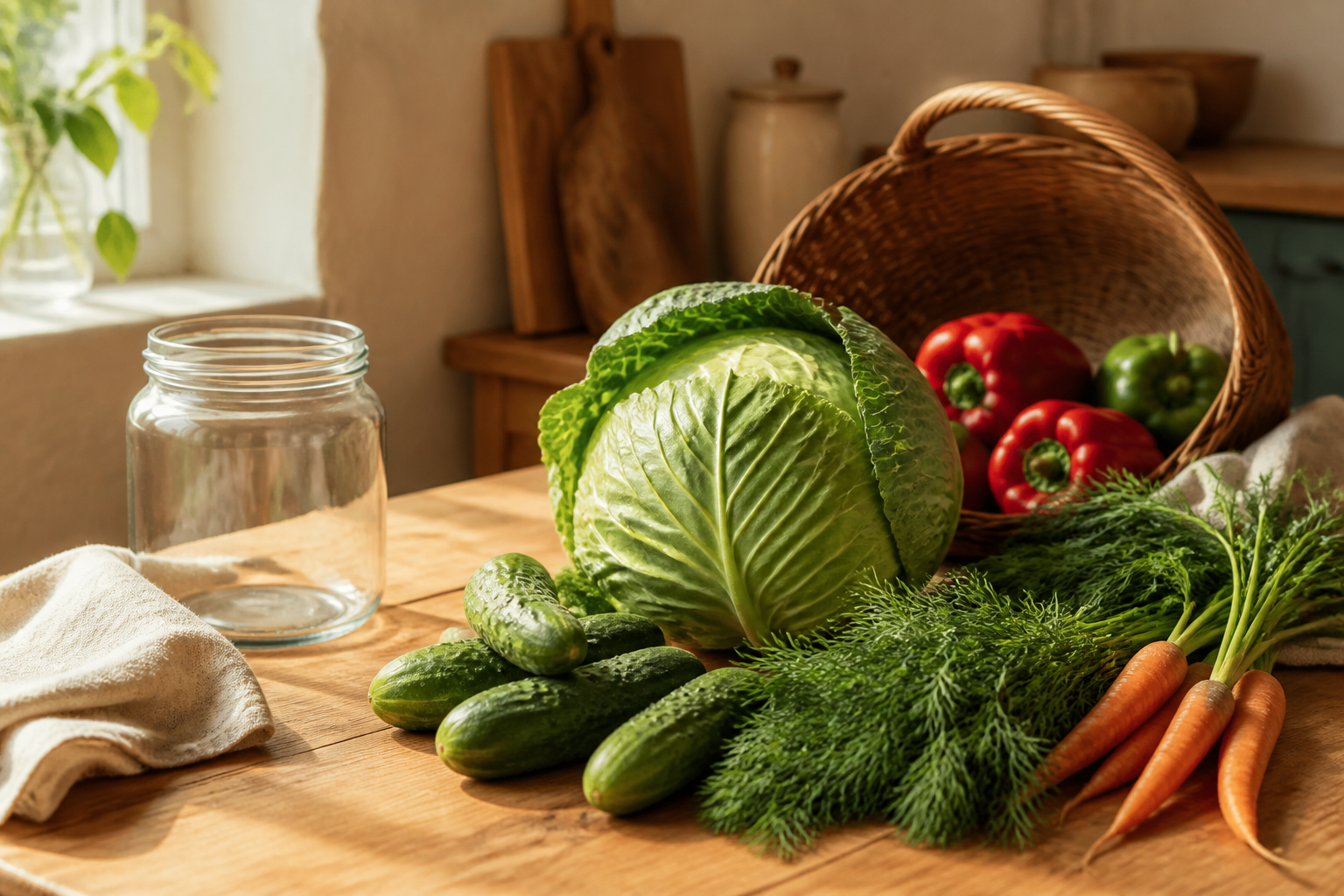
Ferment the Season
Turn fresh cabbage and pickling cucumbers into something you will be glad to eat later, with room to adjust the flavor and batch size.
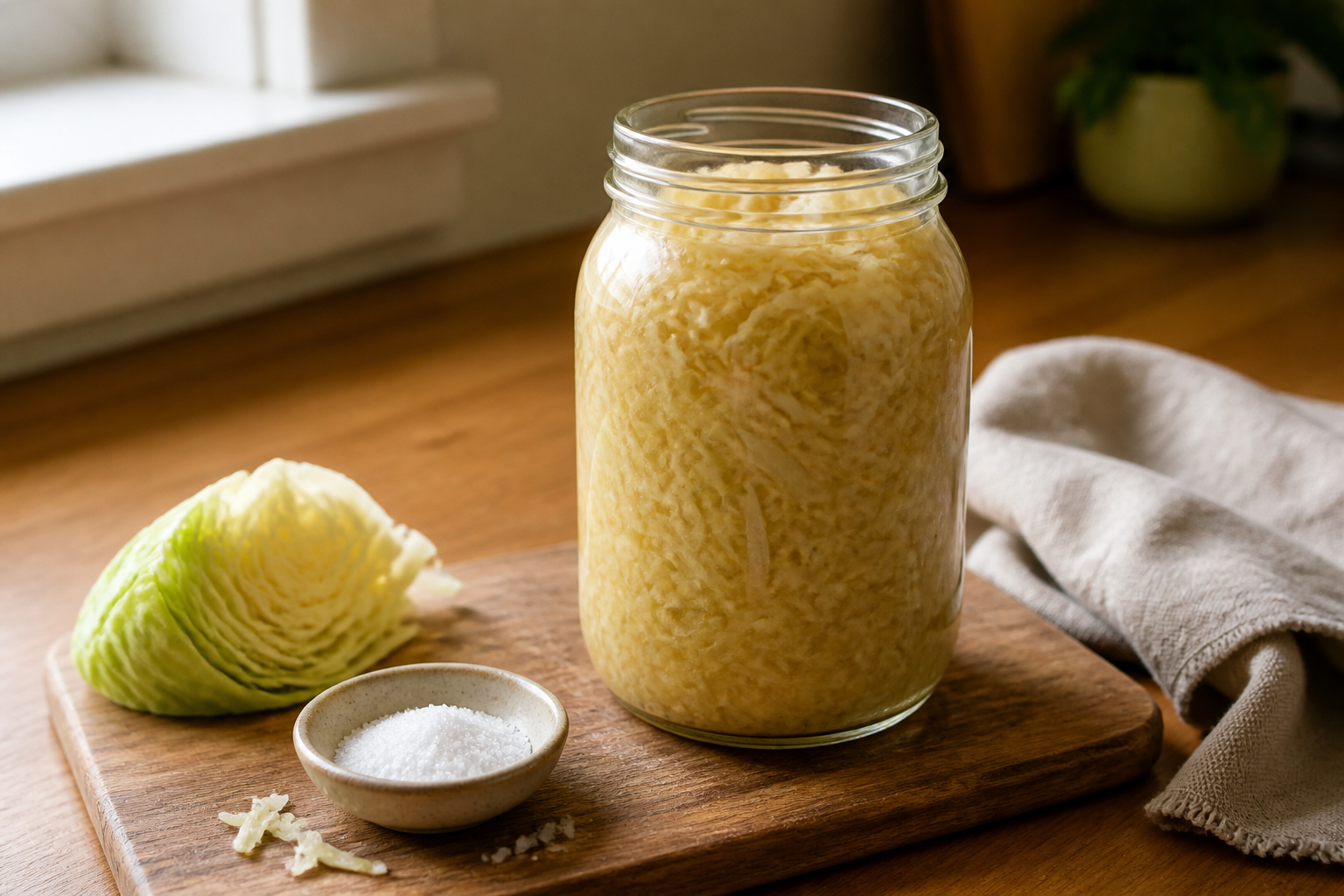
Fermentation
Your First Mason Jar Ferment
Make one quart of sauerkraut from start to finish, with clear measurements, daily checks, and a refrigerator-ready result.
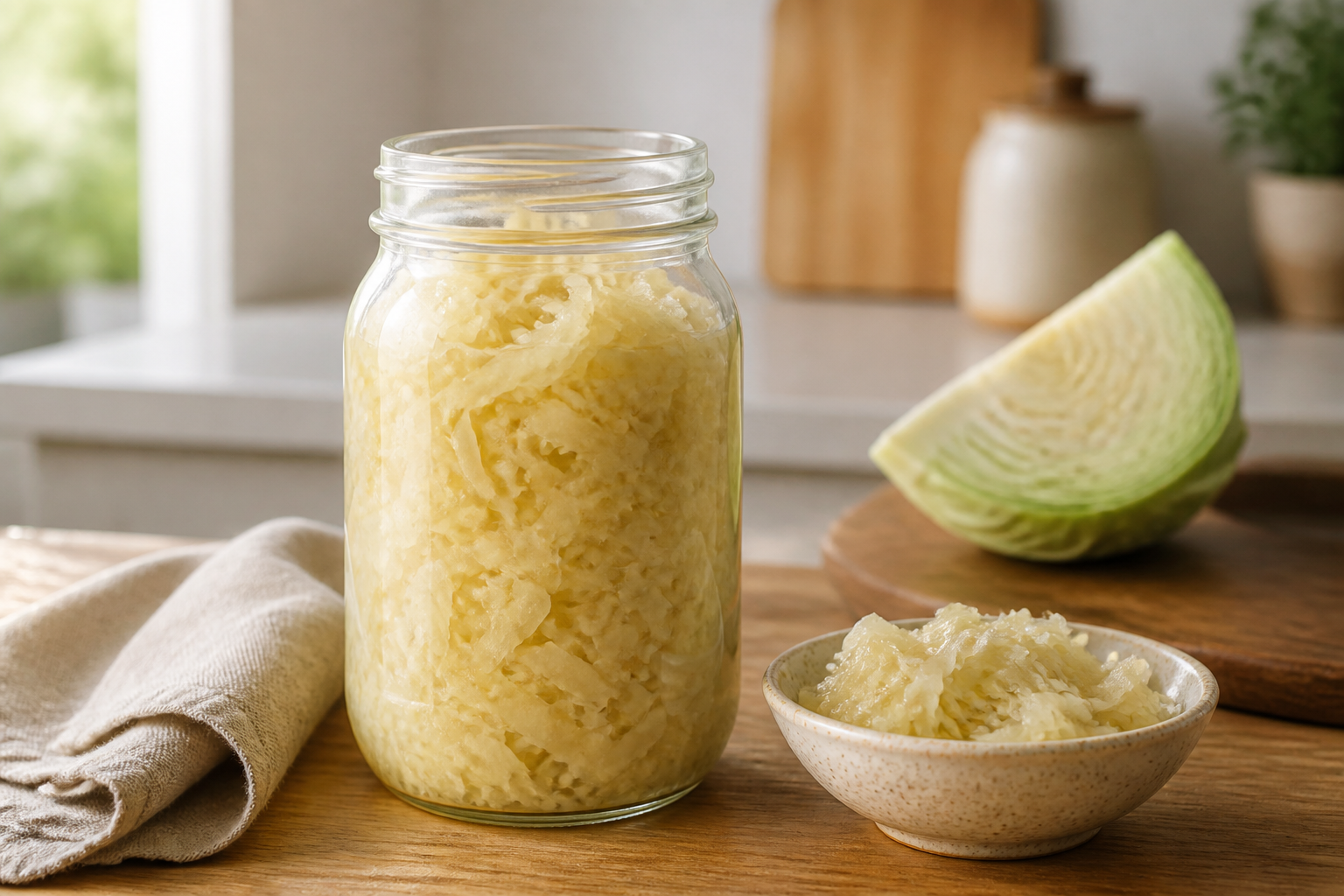
Fermentation
Why Fermented Vegetables Need to Stay Under the Brine
Learn why vegetables stay below the brine, how weights and airlocks differ, and what to do when pieces float.