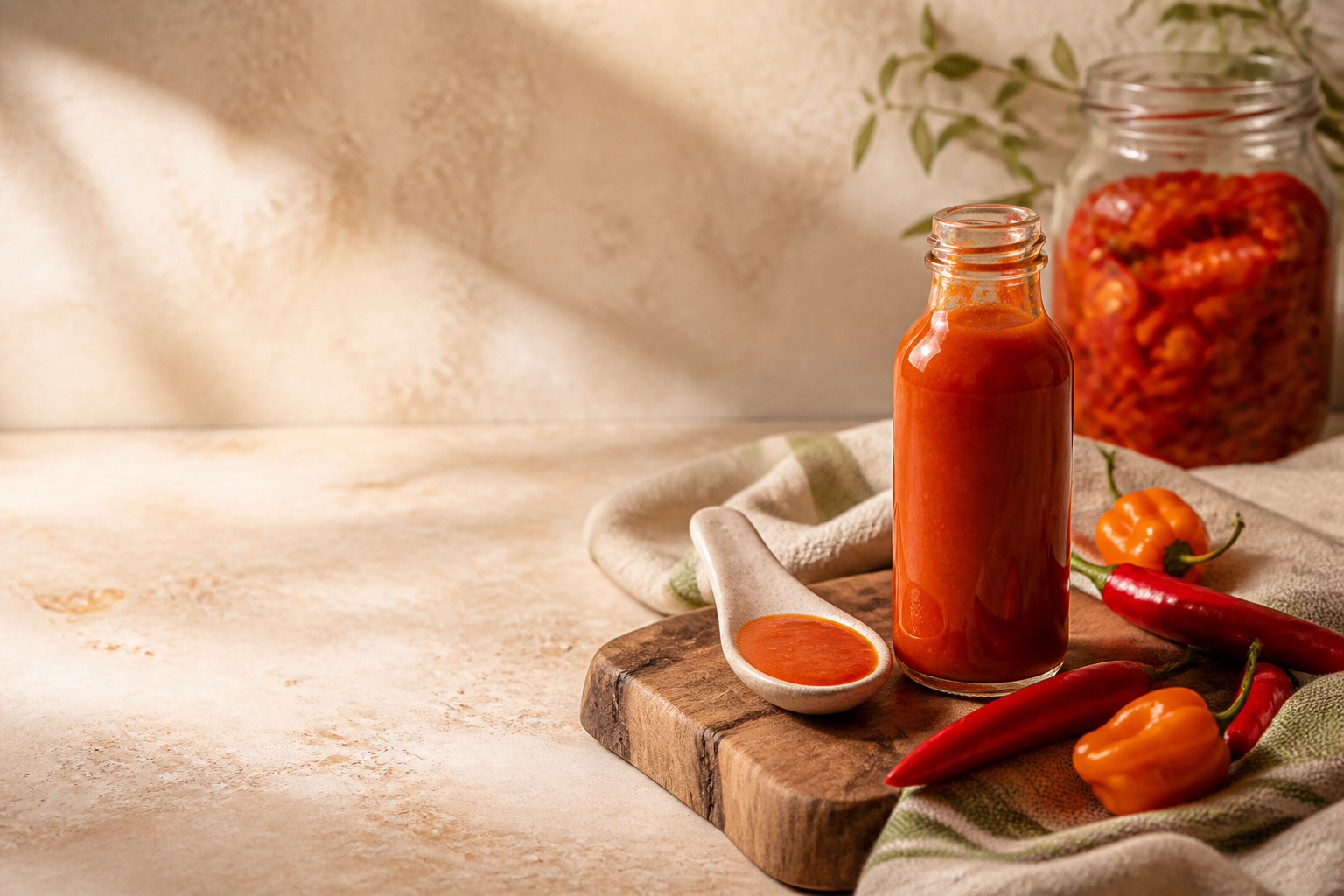
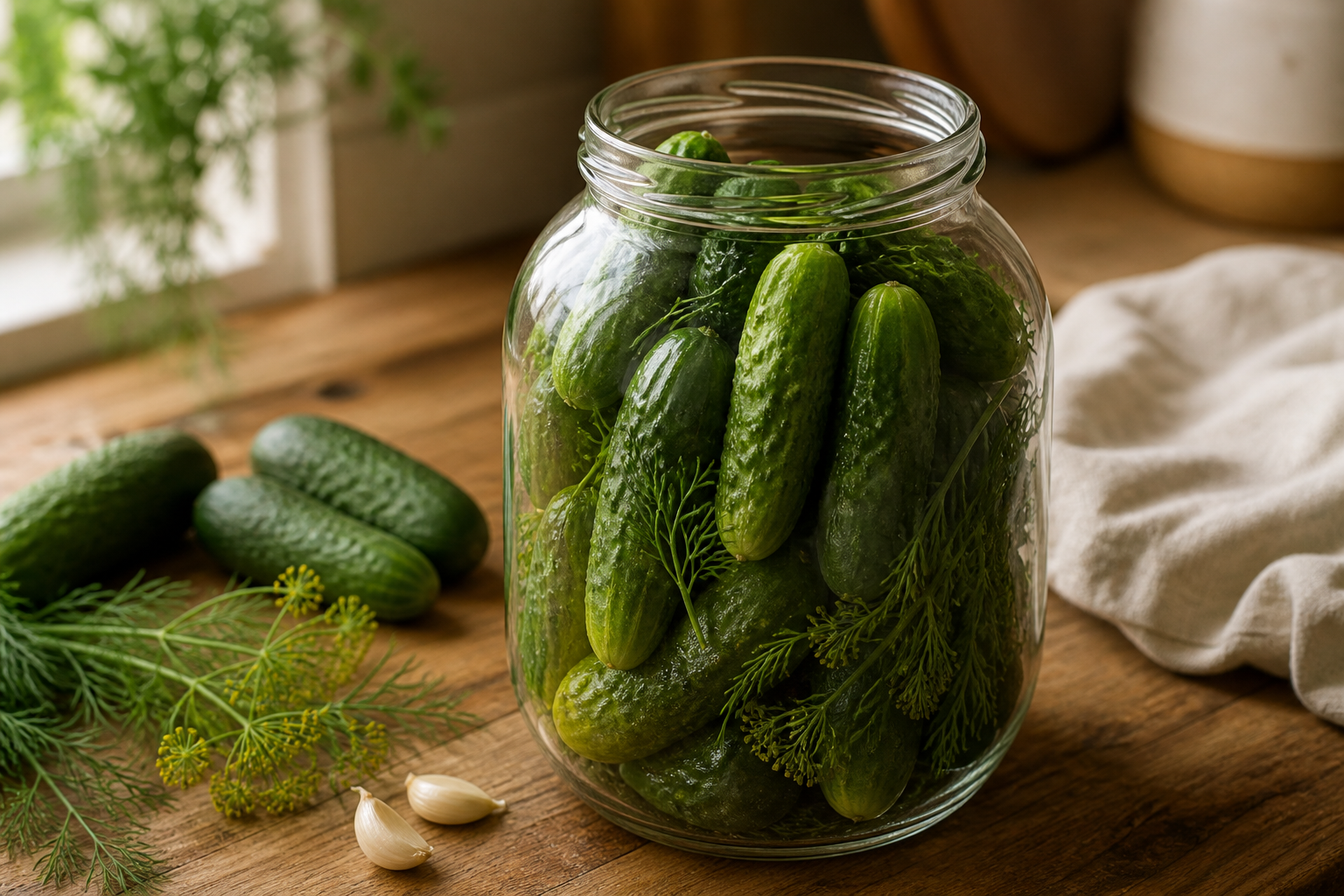
These carrot sticks stay crisp, turn pleasantly tangy, and take well to garlic and dill, ginger and coriander, or a little chile. The 2.5% brine stays the same whichever flavor you choose.
Recipe at a glance
- Makes: one small batch in a 1-quart wide-mouth Mason jar
- Carrots: about 1 pound (450 g) before trimming
- Starting brine: 2 cups plus 1 tablespoon water (487.5 g) and about 2 1/4 teaspoons canning or pickling salt (12.5 g; weigh for an exact 2.5% brine)
- Fermentation range: 70 to 75 degrees F
- Working window: about 7 days to 3 weeks
- Storage: refrigerate when the carrots are pleasantly tart
Ingredients
- about 1 pound firm carrots (450 g)
- 2 cups plus 1 tablespoon water (487.5 g)
- about 2 1/4 teaspoons canning or pickling salt (12.5 g; weigh for an exact 2.5% brine)
Optional flavor additions:
- 1 small garlic clove
- a small sprig of fresh dill
- 5 to 10 grams sliced fresh ginger
- 1/2 teaspoon coriander seed
- a few peppercorns
- a thin slice of fresh chile
This recipe makes 500 g of brine. Salt is 2.5% of that total: multiply the brine weight by 0.025 for the salt and by 0.975 for the water.
Carrot sticks sit in a brine mixed separately, so calculate the salt from the brine, not from the carrot weight.
Choose your seasonings
Experiment with
- garlic and dill for a familiar pickle profile;
- ginger and coriander for a warmer, brighter jar;
- a small piece of fresh chile for heat;
- stick thickness and fermentation time within the working range.
Keep steady
- the 2.5% starting brine;
- complete submersion and low-oxygen conditions;
- the fermentation temperature and acidification process;
- clean handling and a refrigerated finished jar.
Equipment
- 1 clean 1-quart wide-mouth Mason jar
- kitchen scale that reads to at least 0.1 gram
- clean mixing container for the brine
- suitable food-grade fermentation weight
- fermenting lid and screw band
- clean plate or tray for beneath the jar
Wash the jar and tools in hot, sudsy water and rinse them well before use.
1. Mix the brine
Measure 2 cups plus 1 tablespoon water (487.5 g) and about 2 1/4 teaspoons canning or pickling salt (12.5 g). Weigh the salt for an exact 2.5% brine, then stir until it dissolves.
You may have some brine left after the jar is full. Save or discard the extra, but do not dilute it.
2. Prepare the carrots
Scrub or peel the carrots. Trim the ends and cut the carrots into sticks about 3 to 4 inches long and roughly 1/4 to 3/8 inch thick.
Even pieces ferment more evenly. Thinner sticks soften and sour sooner. Thicker sticks generally stay firmer and take longer.
3. Build the flavor
Place your chosen flavor additions in the bottom of the jar.
Keep the additions modest enough that carrots remain the main ferment. A garlic clove, a little dill, ginger, coriander, peppercorns, or chile can change the profile without changing the brine formula.
4. Pack the jar
Stand the carrot sticks upright and pack them snugly. Leave enough room above the carrots for the weight, brine, and about 1 to 1 1/2 inches of headspace.
Do not force so many carrots into the jar that the weight or lid cannot sit correctly.
5. Add brine and keep the carrots submerged
Pour in enough of the mixed brine to cover the carrots completely. Add the fermentation weight and confirm that every carrot and flavor addition remains beneath the liquid.
The brine provides the salt. The weight holds the carrots below the liquid, away from the air at the surface.
Understand the whole submersion system
6. Cover the jar
Wipe the rim clean. Fit the fermenting lid and screw band according to the manufacturer's instructions.
Set the jar on a clean plate or tray in case the brine rises as gas and vegetable movement change the level.
7. Ferment at room temperature
Keep the jar between 70 and 75 degrees F. Start checking the carrots after about 7 days. They may need up to 3 weeks to reach the acidity and texture you prefer.
Check the jar daily. Keep the carrots submerged and watch the temperature. Bubbles, cloudy brine, and sediment are common during active fermentation, but they do not tell you by themselves that a batch is safe. Before tasting, check for the spoilage signs in the next step.
8. Decide when the carrots are ready
The carrots should smell clean and pleasantly sour, taste tangy rather than raw, and remain crisp enough to bite.
If you use a calibrated food pH meter, a reading of 4.6 or below documents that the batch has crossed a widely used acidification boundary. It does not make this a shelf-stable product.
Do not taste the batch if you see mold, notice a rotten or disagreeable odor, or find the carrots slimy. Discard the batch.
9. Refrigerate
When the carrots taste tangy, smell clean and sour, and still have a crisp bite, replace the fermenting lid with a clean storage lid and refrigerate the jar.
Keep the carrots covered with brine and use clean utensils when serving. This is a refrigerated ferment, not a canning recipe.
Make the next jar your own
For your next jar, try garlic and dill, ginger and coriander, or a slice of chile. Keep the same brine and temperature range, then refrigerate the finished jar so you can taste what the seasonings changed.
Choose another fermentation project
Sources & technical references
We chose 2.5% salt by total brine weight using published carrot and vegetable fermentation research. This is a refrigerated recipe, not a canning method.