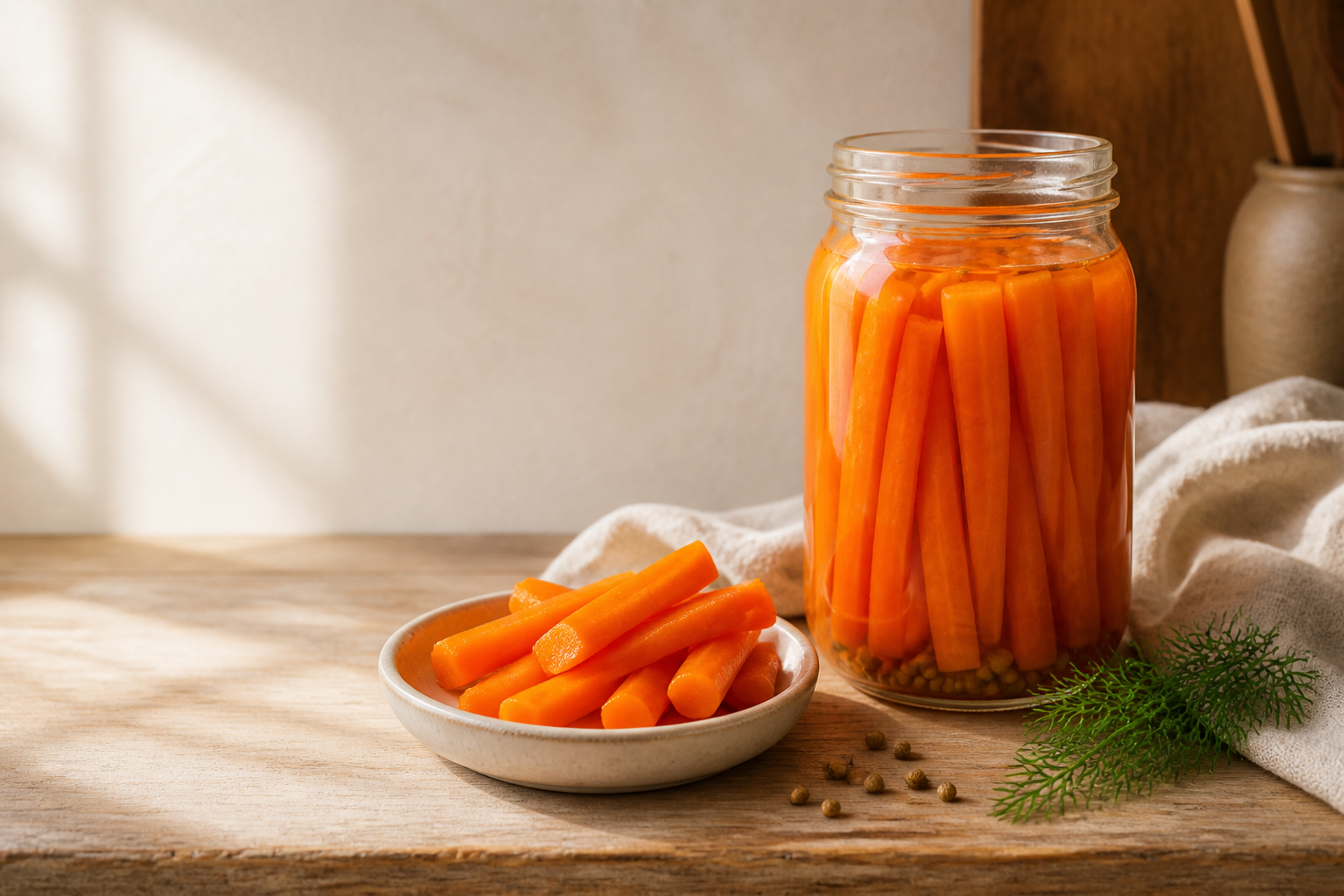
Firm pickling cucumbers, plenty of dill, and a salt-and-vinegar brine make crisp, tangy pickles with real fermented flavor. Add garlic, dried chile, or pickling spice if you like.
About the batch size: This recipe makes one gallon. If you change the batch size, scale the cucumbers, salt, water, and 5%-acidity vinegar together.
Recipe at a glance
- Makes: one one-gallon batch
- Cucumbers: 4 pounds of 4-inch pickling cucumbers
- Fermentation range: 70 to 75 degrees F for about 3 to 4 weeks
- Cooler range: 55 to 65 degrees F for about 5 to 6 weeks
- Avoid: temperatures above 80 degrees F
- Storage: refrigerate fully fermented pickles, or use the source's canning method
Ingredients
- 4 pounds 4-inch pickling cucumbers
- 2 tablespoons dill seed, or 4 to 5 heads fresh or dry dill weed
- 1/2 cup canning or pickling salt
- 1/4 cup 5% acidity vinegar
- 8 cups water
Optional additions:
- 2 cloves garlic
- 2 dried red peppers
- 2 teaspoons whole mixed pickling spices
Mix the salt, water, and 5%-acidity vinegar as one brine before it reaches the cucumbers. Scale those ingredients together, and do not use vinegar below 5% acidity.
Choose your pickle flavor
Experiment with
- the optional garlic;
- dried red pepper for heat;
- whole mixed pickling spices;
- how sour the pickles become within the appropriate fermentation window.
Keep steady
- the salt, water, and 5%-acidity vinegar proportions;
- submersion and suitable food-contact materials;
- temperature, time, and adequate acidification;
- the separate shelf-stable canning instructions.
Equipment
- 1 clean, suitable one-gallon fermentation container
- a suitable plate or food-grade cover that fits inside the container
- a suitable weight
- a clean cloth or another cover specified by the source
- measuring cups and spoons
- a colander
- a clean towel
Use only food-grade glass, plastic, or stoneware that is suitable for fermentation. Do not use copper, iron, galvanized metal, or a lead-glazed container.
1. Prepare the cucumbers
Choose firm, unwaxed pickling cucumbers about 4 inches long.
Wash them carefully. Cut a 1/16-inch slice from the blossom end of each cucumber. Leave about 1/4 inch of stem attached at the other end.
Removing the blossom end matters because it may contain enzymes that can soften pickles.
2. Layer the dill and cucumbers
Place half of the dill and half of any optional spices in the bottom of the clean container.
Add the cucumbers. Put the remaining dill and optional spices on top.
3. Mix the brine
Combine:
- 1/2 cup canning or pickling salt
- 1/4 cup 5% acidity vinegar
- 8 cups water
Stir until the salt dissolves. Pour the full brine over the cucumbers.
If you need a larger batch, scale this complete brine formula. Do not top up with plain water, which would dilute both the salt and vinegar.
4. Keep the cucumbers submerged
Place a suitable food-grade cover over the cucumbers, then add enough weight to keep the cucumbers 1 to 2 inches beneath the brine.
Use the weight to hold the cucumbers below the brine and the outer cover to keep the container clean.
Why fermented vegetables need to stay under the brine
5. Ferment at the right temperature
Keep the container between 70 and 75 degrees F for about 3 to 4 weeks.
Temperatures between 55 and 65 degrees F are acceptable, but fermentation will take about 5 to 6 weeks. Avoid temperatures above 80 degrees F because the pickles can become too soft.
Check the container several times each week. Confirm that the cucumbers remain submerged and the vessel stays within the method's temperature range.
6. Know when to stop
Do not rely on bubbles, sourness, smell, or one calendar date by itself.
If the pickles become soft or slimy, develop a disagreeable odor, or show mold, do not taste them. Discard the batch.
7. Refrigerate the finished pickles
When the pickles smell clean and sour, taste pleasantly tangy, and still feel firm, refrigerate them in their original container. Fully fermented pickles may be refrigerated for about 4 to 6 months.
If you want shelf-stable storage, use a separately validated canning process. Do not invent a canning time from this article.
About changing the batch size
To make more, multiply the cucumbers, salt, water, vinegar, and seasonings by the same factor. To make less, recalculate the complete formula for the vessel instead of adjusting one ingredient by eye.
Leave room for the cover and weight, keep the cucumbers beneath the brine, and follow the same temperature and timing guidance.
Try another first project
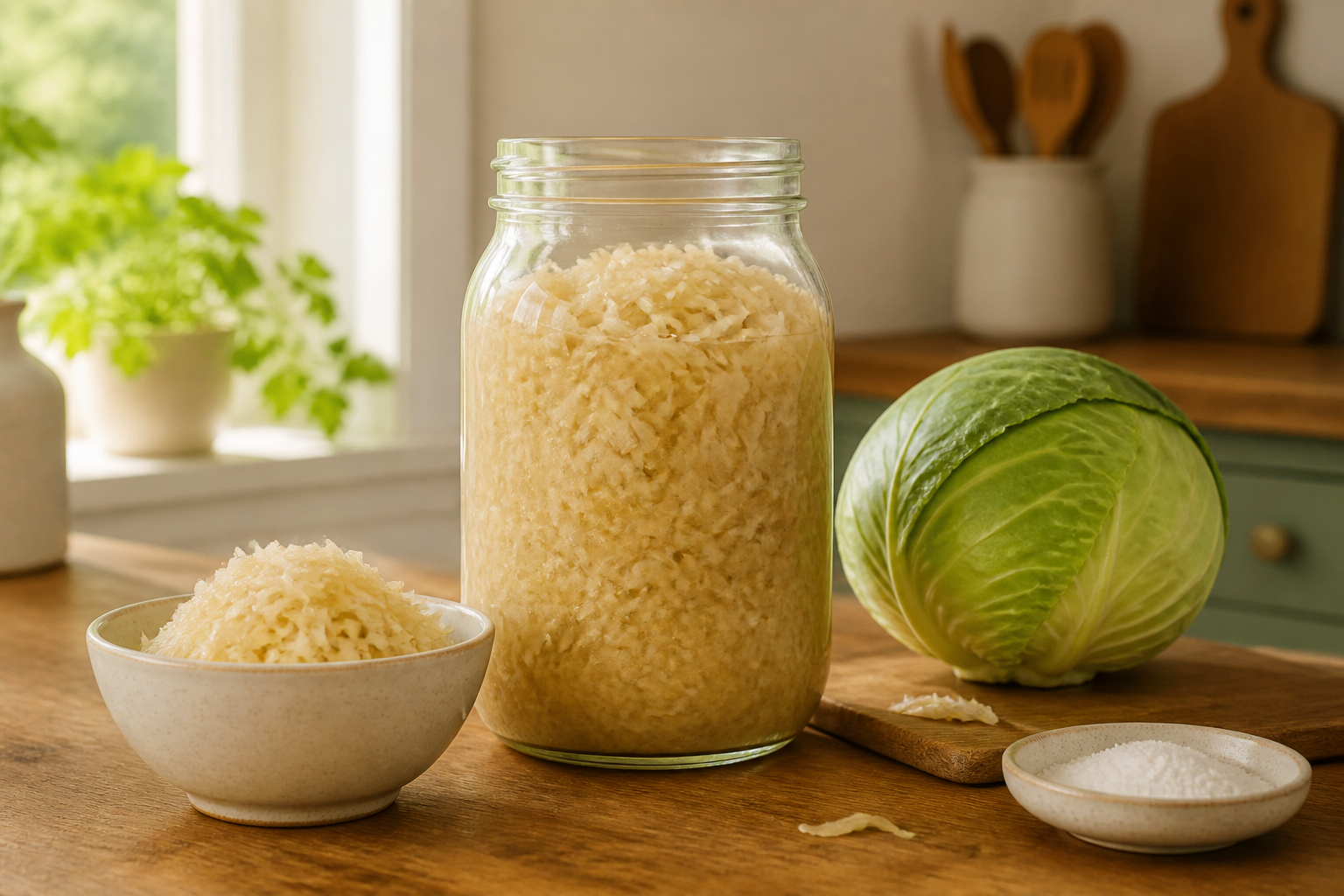
If you want a compact one-quart project, start with the weight-based sauerkraut recipe.
Make classic small-batch sauerkraut
Sources & technical references
This page uses the one-gallon pickle formula and storage guidance listed below.
- National Center for Home Food Preservation: Dill Pickles
- National Center for Home Food Preservation: Suitable Containers, Covers, and Weights for Fermenting Food
- National Center for Home Food Preservation: General Information on Fermenting
- Penn State Extension: Let's Preserve, Fermentation, Sauerkraut and Pickles