The tiny kitchen project that gets weirdly satisfying
“I can’t believe I grew this.”
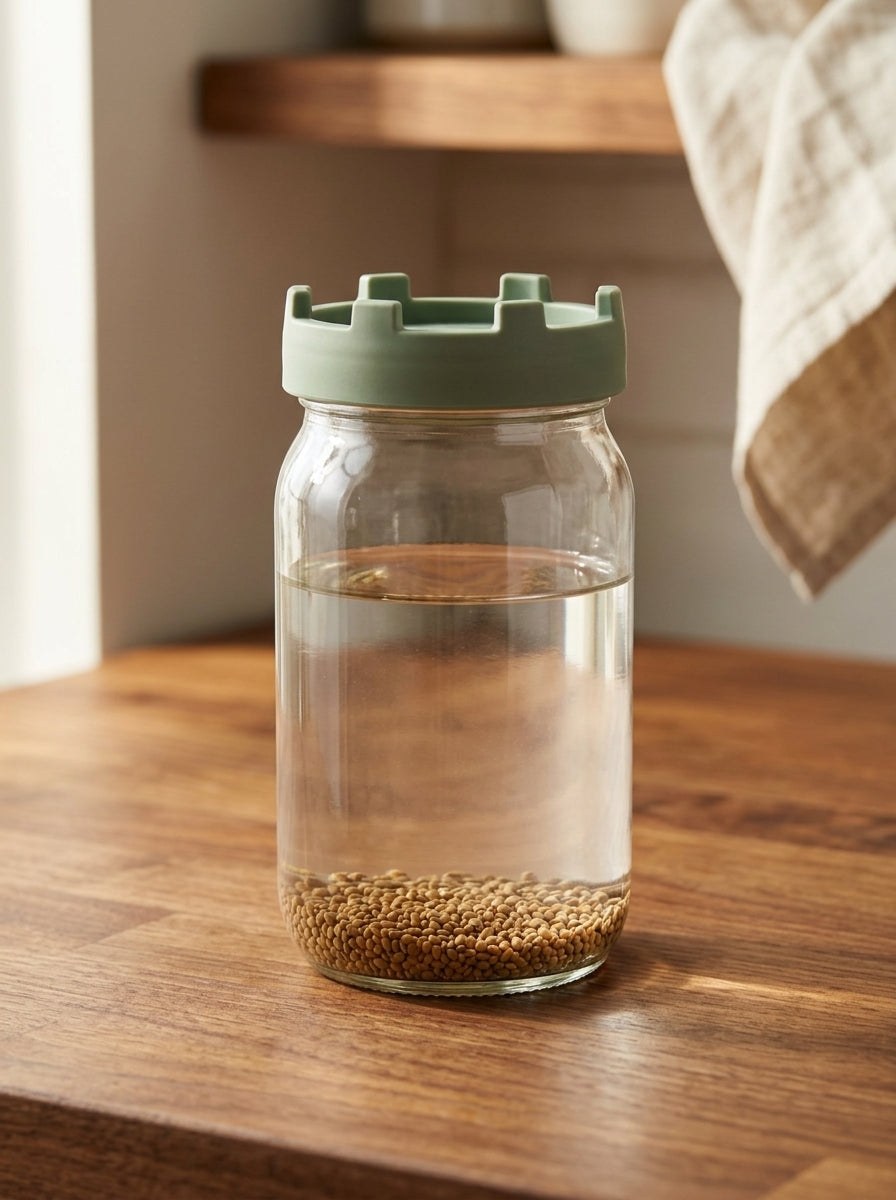
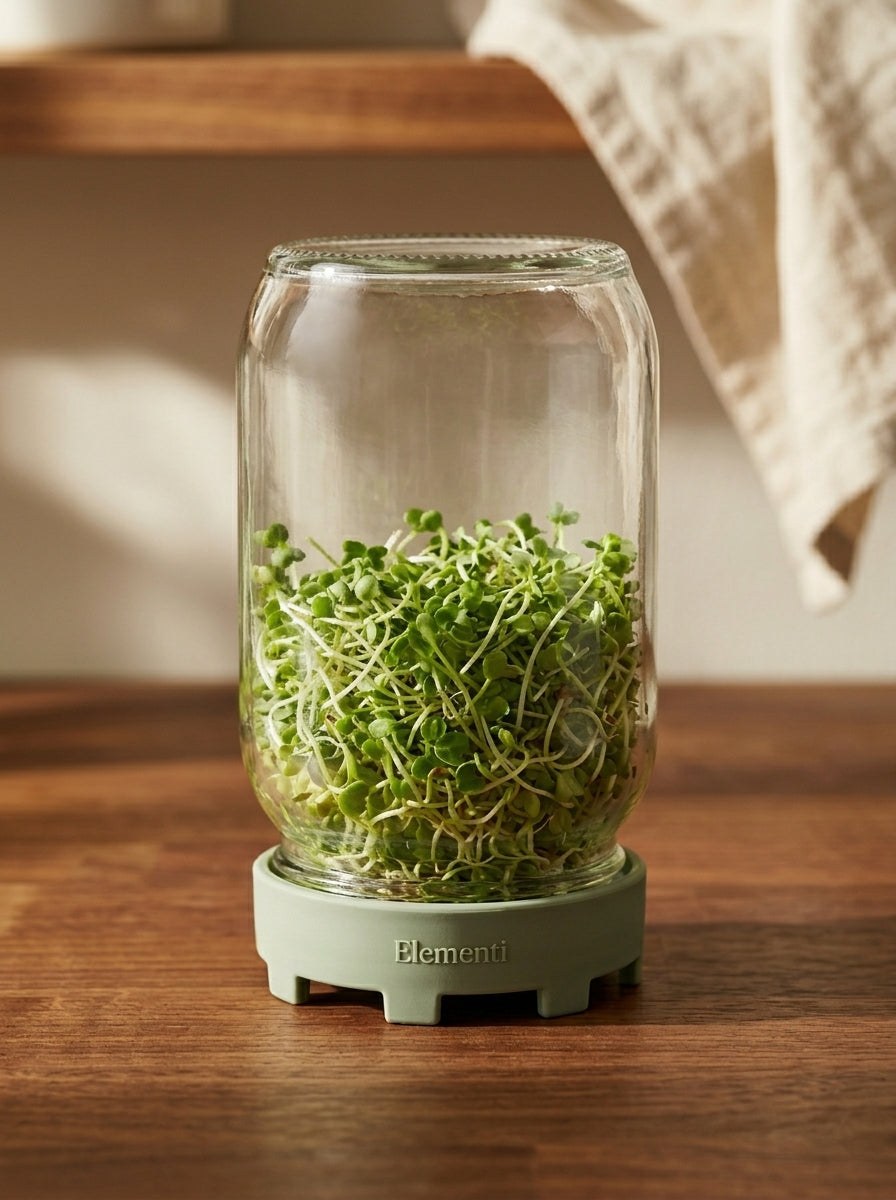
A few dry seeds, a little water and a few days later: a jar packed with fresh sprouts you grew yourself.

Illustrative scene.
There’s a point somewhere between the dry seeds you start with and the chock-full jar of green sitting on your counter when this stops feeling like a kitchen experiment. You look at it and think, very specifically: I grew that.
A tiny scoop of seeds becomes something alive, fresh and completely edible. You watched the whole thing happen. For such a small project, it’s ridiculously satisfying.
A few dry seeds. Then this.
Tomorrow’s jar won’t look like today’s.
Roots appear. Stems stretch. Tiny leaves open. Before long, checking what changed overnight becomes part of the morning routine.
That’s the addictive bit: quick, visible progress in days, not months.1

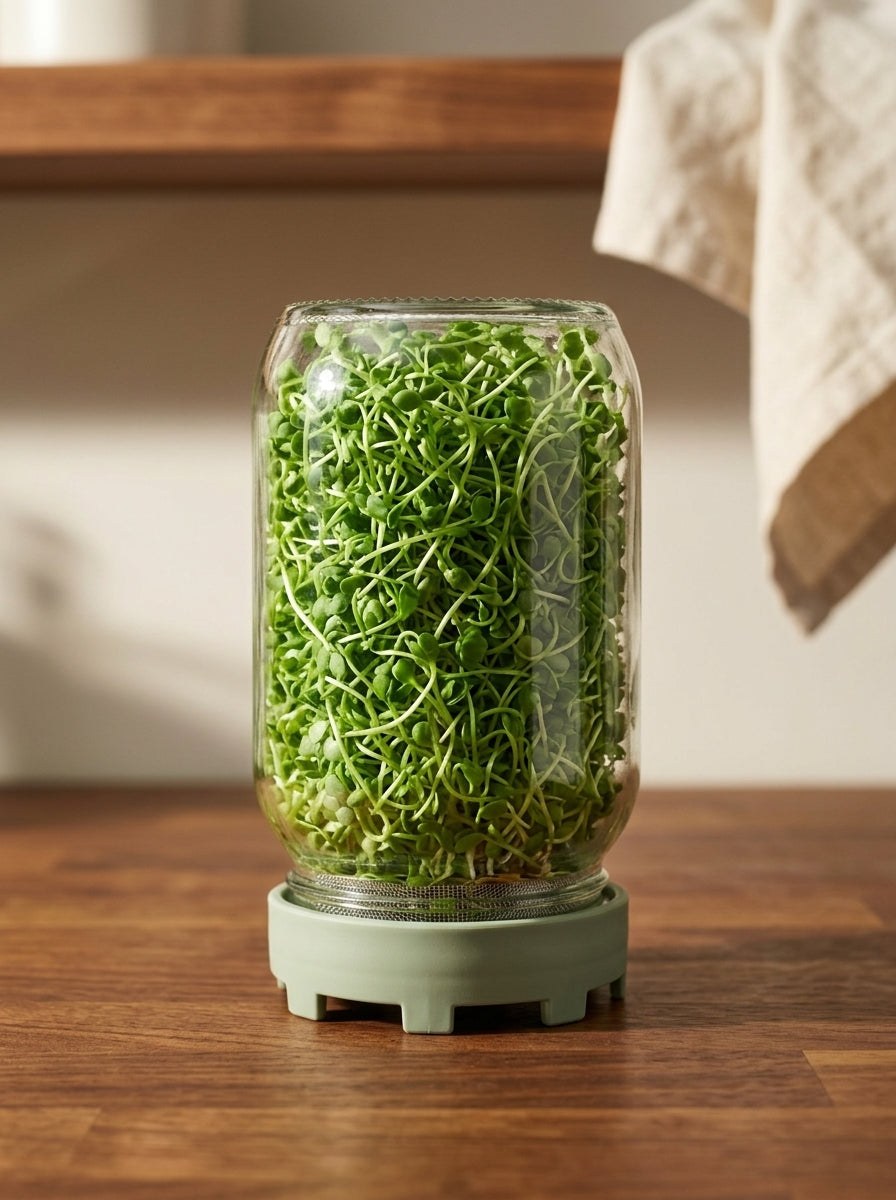
Tiny seed. Much less tiny result. Illustrative pairing, not the same measured batch.
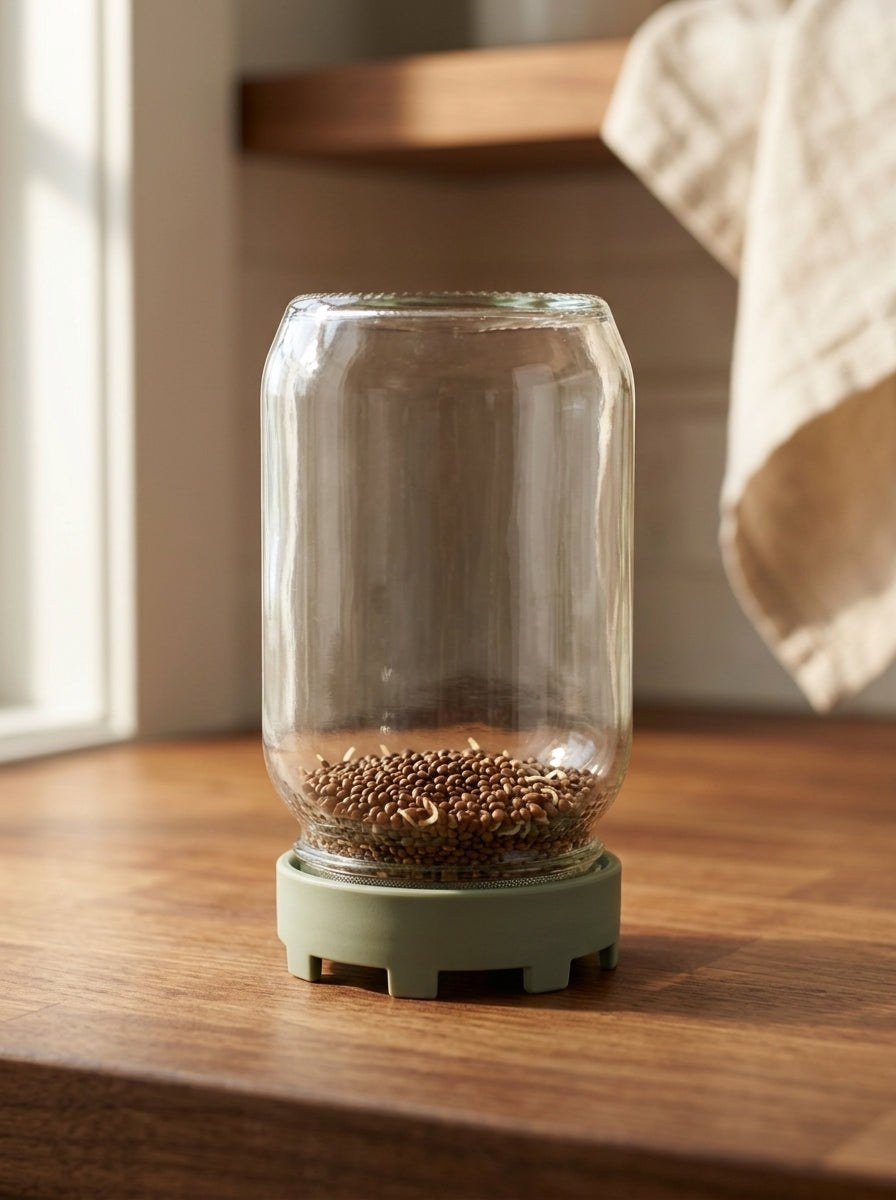
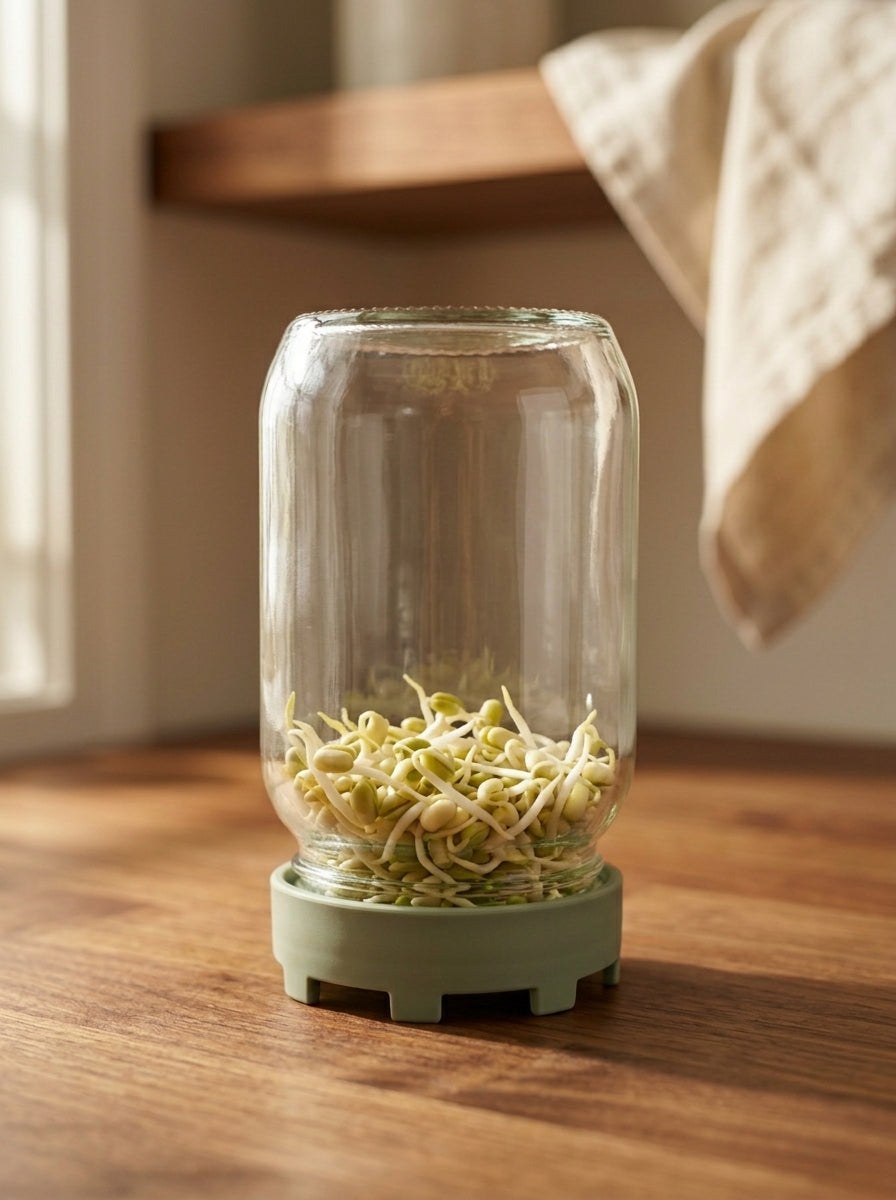
Illustrative sequence. Timing varies by seed and growing conditions.


Steal the good part
It’s like gardening, just a lot easier.
No soil. No backyard. No raised beds. No Saturday afternoon project.
Once the seeds have soaked, your part is basically rinse, drain, repeat. Do it while the coffee brews in the morning and again while you’re cleaning up after dinner.2
You still get the best part of gardening: watching something grow because you started it. You just don’t need to become a gardener first.
01Soak
Wake the seeds up.
Wake the seeds up.
02Rinse + drain
Morning and evening.
Morning and evening.
03Eat
Harvest when they’re ready.
Harvest when they’re ready.
The jar gets full. And suddenly you get it.
A few days ago, it was just a handful of seeds. Now the jar is packed with fresh green sprouts.
You eat them. Throw them on eggs. Tuck them into a sandwich. Add radish sprouts to tacos and start plating lunch with considerably more enthusiasm than lunch probably deserves.
And, yes, you’ll probably show someone.
Because there’s something deeply satisfying about pointing at food and saying, “I grew that.”
Then you finish the batch.
And the empty jar doesn’t really look finished.
It looks ready for the next one.
This is where sprouting gets fun.


The setup
Meet the Elementi Sprouting Kit.
Once you realize sprouting is basically rinse, drain, repeat, the setup starts to matter.
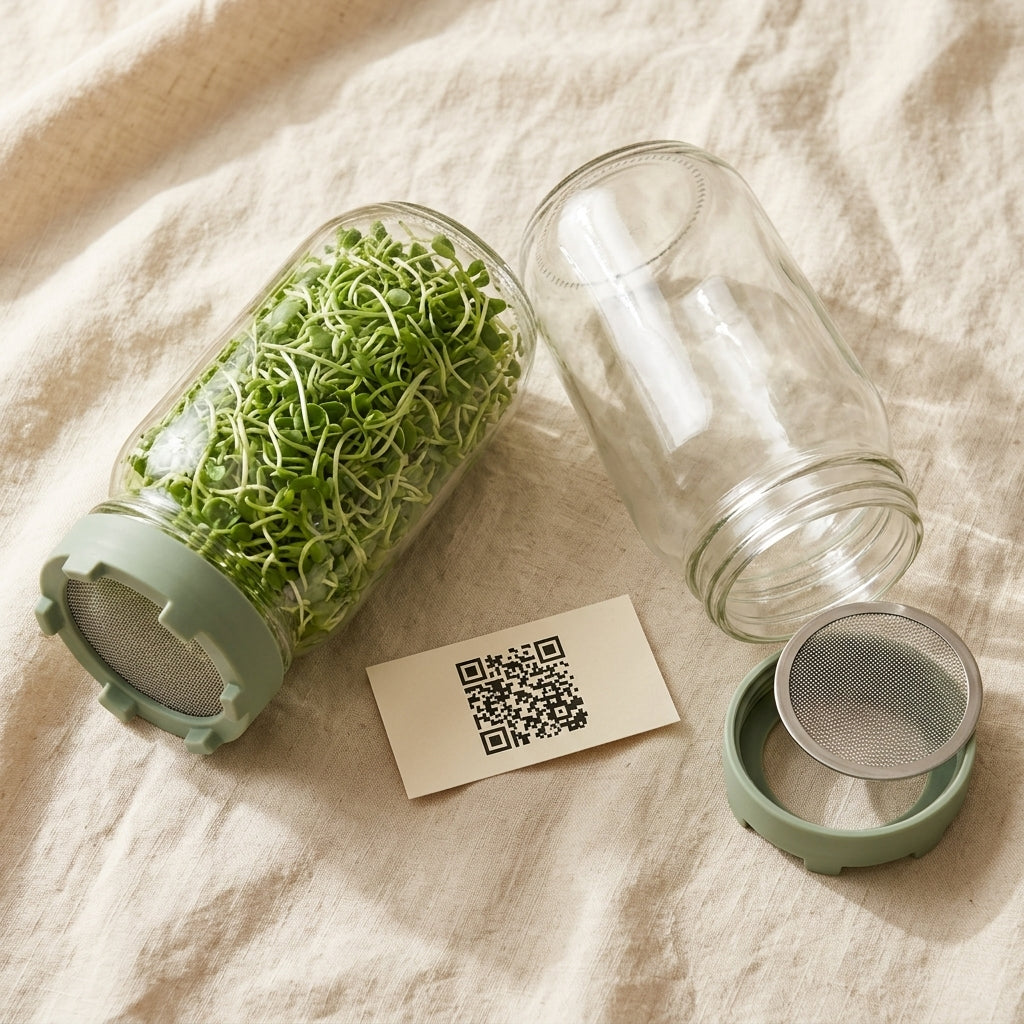
So we designed Elementi around the routine: two wide-mouth 32 oz glass jars, fine 316 stainless-steel screens that keep tiny seeds in while water drains out, and BPA-free sprouting lids that come apart for cleaning.2
And because there are two complete jars, you can start the next batch before the first one disappears into sandwiches, tacos and whatever else you’ve decided suddenly needs sprouts.
- 2 × 32 oz wide-mouth glass jars
- 2 × fine 316 stainless-steel screens
- 2 × BPA-free sprouting lids
- Easy to rinse, drain and clean
- Two jars for staggered batches or different varieties
A fair question
Do you need a special jar to grow sprouts?
No. A mason jar, some cheesecloth and a rubber band can absolutely work.
But if you’re going to rinse and drain your sprouts every morning and evening, a purpose-built setup starts making a lot more sense.
Daily rinsing
•
Any ol’ mason jar
Depends on what you rig together
Remove and re-secure cloth, or work around the improvised lid you’re using.
✓
Elementi
Rinse right through the lid
No cheesecloth to remove and put back on.
Draining
•
Any ol’ mason jar
Improvise the setup
Prop the jar securely and arrange somewhere for the runoff to go.
✓
Elementi
Built around rinse + drain
Invert, drain thoroughly, keep going.
Tiny seeds
•
Any ol’ mason jar
Your mesh determines the result
Fine seeds stay put only as well as the cloth or mesh you’ve chosen.
✓
Elementi
Fine 316 stainless-steel screen
Keeps the little guys in while water goes out.
Cleanup
•
Any ol’ mason jar
More loose bits
Jar, cloth, band and whatever else your setup uses.
Keeping it going
•
Any ol’ mason jar
Build another setup
Another jar, another screen, another draining arrangement.
✓
Elementi
Two complete jars included
One can be ready while the next is already growing.
Your little two-jar sprouting system
Start your first batch with Elementi.
$39
The second jar isn’t a spare. Grow two varieties at once, stagger your batches, or start the next one before you finish eating the first.
- 2 × 32 oz glass jars
- 2 × BPA-free sprouting lids
- 2 × 316 stainless-steel screens
- Wide-mouth format
- Top-rack dishwasher safe
- Seeds sold separately
Two jars. Two lids. Two stainless-steel screens. One very satisfying thing to check tomorrow morning.
Not ready to buy? Start with the free 5-Day Sprouting Quick Start.
A simple first-batch routine, plus the 3 things most beginners get wrong.
Before you start
The practical stuff.
Do I need special seeds?
Use seeds intended for sprouting. Lots of seeds will germinate, but ordinary garden seeds may be treated with fungicides or pesticides that aren’t intended for food use.3
Are seeds included?
Nope. Pick the varieties you’re actually excited to grow.
How much attention does this take?
Once the initial soak is finished, rinse and drain twice daily. Morning and evening works nicely.2
How long until I can eat them?
It depends on the seed, but many common sprouts go from seed to harvest in roughly 3–7 days.1
Where should the jar live?
Somewhere at normal room temperature, away from harsh direct sunlight. Leafy sprouts can get some ambient light as they develop.
What about cleanliness and mold?
Clean equipment, use sprouting seed, rinse consistently and drain thoroughly. Don’t let sprouts sit waterlogged. If a batch becomes slimy, moldy or smells wrong, toss it and start again. Raw sprouts can carry harmful bacteria; people at higher risk from foodborne illness should avoid raw sprouts, and thorough cooking reduces that risk.6
How do I clean the kit?
Take the components apart and wash them thoroughly. The current Elementi kit is top-rack dishwasher safe; avoid dishwasher water above 140°F with the glass.2
Why two jars?
Two varieties at once, staggered starts, or one jar finishing while the next is already underway. After your first good batch, waiting for Jar #1 to become available starts feeling deeply unreasonable.
Will the lids fit other jars?
They’re designed for wide-mouth mason jars.2
Sources & substantiation
- Growth speed / harvest timing. Common sprouts mature within several days, with timing varying by variety and conditions. UC Davis Postharvest Center.
- Elementi product facts: $39 price, two 32 oz glass jars, BPA-free lids, removable 316 stainless-steel screens, wide-mouth compatibility, twice-daily rinse/drain guidance and top-rack dishwasher guidance. Elementi.
- Use seeds intended for sprouting rather than planting seed that may be chemically treated. Nebraska Extension.
- Raw-sprout food-safety guidance. U.S. FDA.
